
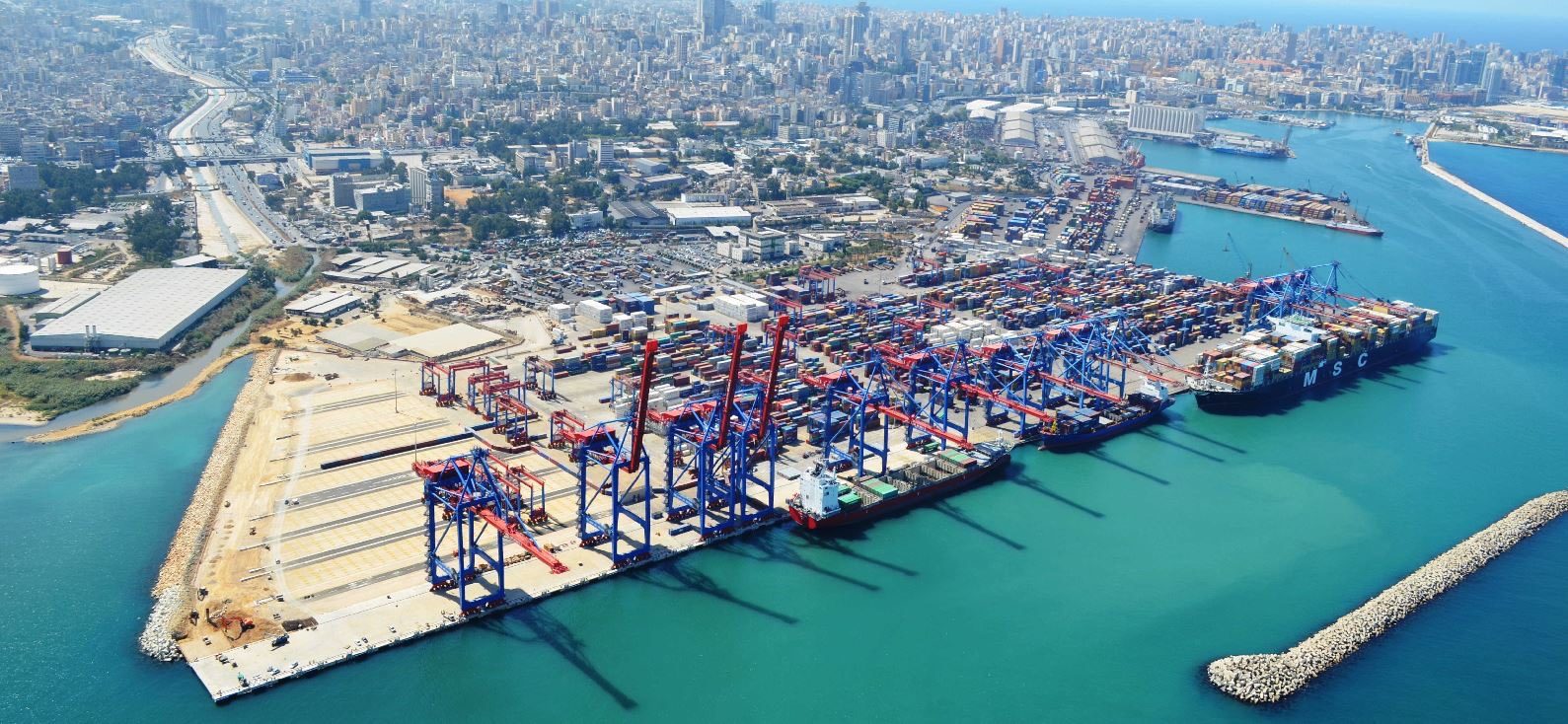
Port of Beirut: one port, one system, awarded gold
The port authority of a fast-growing Mediterranean port uses INPLAN for port administration, cargo handling, terminal operations, real estate and invoicing. For this, the port received the IAPH IT Award in Gold.
Growth that demands systems
The Port of Beirut is a Mediterranean port and an engine for the region's economy. Over several years, the port grew strongly and without pause: tonnage rose from 4.5 to 8.3 million tonnes, container throughput from 0.4 to 1.1 million TEU. The terminal area doubled, new equipment was added and the organisation was restructured.
With growth came more transactions, more demand for storage space and more traffic in the port. Established processes reached their limits, and port management had to fear that operations would soon no longer cope with day-to-day business. It opted for a long-term strategy that included a modern IT foundation and end-to-end port software.
The port put the project out to international tender. INPLAN prevailed against well-known vendors from Europe and the Arab world.
Three steps to a complete system
The port system was developed in close cooperation with the port's IT department: web-based, multi-entity, multilingual, with real-time access to all transactions, past, current and planned.
INPLAN supplied the port software and the necessary hardware, set up the system, trained the users and supported the port through the first months of operation. Teams from INPLAN's headquarters in Germany and on site in Beirut worked together on this. For the database, web server and workstations, the project relied on common standards so that the system stays easy to use and the investment manageable.
Step 1: port operations
Cargo handling went live first. Since then, the port's operational processes have run entirely in the new software. The port records the pre-advice of seagoing vessels and plans berths, cranes and handling equipment. Port orders become work instructions for cargo handling and storage. What actually happens is recorded: handling times, customs procedures, warehouse movements and weighings. Truck handling is managed at the gate, and customers and business partners reach the port through an internet portal.
Step 2: port invoicing
In the second step, a dedicated invoicing system replaced the previously manual invoicing. Every fee and every service provided in the port goes into the invoice: berth dues, crane services, fuel, waste disposal and much more. Prices are based on the standard tariff or on an agreement with the customer. Invoices and payment information go quickly, and partly automatically, to all parties. Payment is made online or through the bank, and the posting data goes to finance ready to use. At peak times, the port authority issues up to 1,500 invoices in a single working day. Because every service is recorded and charged correctly, the new invoicing has ultimately also contributed to higher revenue.
Step 3: real estate
Property management came last. All of the port's land, areas and rental units are managed in one application with a graphical interface. Contracts, follow-ups, automatic renewals and prices are in one place. Because property management is linked to port operations and invoicing, every contract is invoiced directly.
All parties on one system
Beneath the port system lies a shared database for the administration's core systems. Through it, the system is connected to the port's partners: the container terminal operator, the country's major banks, the authorities, the harbour master, agents, freight forwarders and customers. Step by step, the port system is growing into a port community system.
For the parties involved, this has changed day-to-day work. Shipping agents receive their invoices automatically and pay online, manage voyages and services in the system, submit the manifest electronically and see the status of their delivery orders. Customs checks delivery orders electronically and sees the movements at the gate. Customs agents handle container release online. In the port itself, invoice desks and cash desks have disappeared, fewer cars drive into the port area, and statistics have become more reliable.
- Container terminal
- Banks
- Authorities and harbour master
- Agents, freight forwarders, customers
Faster and paperless
Terminal operations run entirely without paper. Invoices alone save around 3,000 sheets a day. Core processes have become faster, and the port's staff work more efficiently.
Customers no longer need to come to the port for many transactions. That shortens waiting times and takes traffic out of the port area. Because there is less manual intervention, transactions are more accurate, and the port has gained credibility. Authorities, banks, agents, freight forwarders and customers work together online and see the same status.
900 users work with the system in daily operation.
“Excellent knowledge of port processes and INPLAN's dedicated support laid the foundation for this award.”
IAPH IT Award in Gold
The world's best port IT solution. Presented at the World Ports Conference to the Port of Beirut for its port system built with INPLAN. Selected from more than 20 entries worldwide.
The IAPH represents more than 200 ports from over 90 countries. The award recognised software and IT projects delivering above-average benefits for the port, its customers, the port community and the entire logistics chain.
Gold
For INPLAN's port system at the Port of Beirut.
More about the solutions
IPMS
Vessel notification, berths, port dues, reports to authorities and e-invoicing in one system.
Learn moreAreas and contractsProperty management
Manage lease, rental and land contracts and invoice them automatically.
Learn morePort graphicVisual Port
Berths, vessels and storage areas live at a glance, with AIS vessel data.
Learn moreMore case studies
Seehafen Wismar
ITOS runs port and cargo handling operations, from order costing to invoicing.
Read the case studyBaltic Sea · Deep-water portMukran Port
Port and rail operations, real estate and invoicing in one central system.
Read the case studyInland port · NRWStadthafen Lünen
Cargo throughput more than doubled: port operations, warehousing, statistics and invoicing in one system.
Read the case studyChoose a workflow from your port and we’ll show it to you in INPLAN in 30 minutes
No obligation. Online or at your site.
Phone+49 208 6591-950
Emailinfo@inplan.de
Helpful for our first reply: your organisation and the process you would like to see.